One Question Is Never Enough
November 19, 2026
Welcome to the latest in our series highlighting experts and how they are using Answers From Me to reach their audience. We hope you enjoy this expert spotlight, and that it gives you some new ideas about how to share your own expertise!
A good answer usually leads to a better question. This month we're featuring Arne van Oosterom, founder of Future Skills Academy, who has spent his career helping teams and leaders build the human skills that change demands. His AI Agent for Future Skills lets seekers keep asking for as long as their curiosity lasts.
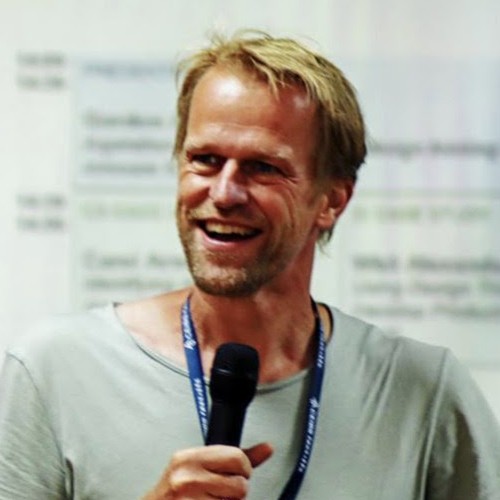
“The pattern your brain reaches for first is rarely the best one. Learn to catch it and build past it.”
Here are three ways Arne's seekers are putting that into practice:
1. Conversations, not lookups. 63% of Arne's seekers ask more than one question, and one in five ask five or more.
2. Room to practice. One student drafted a one-line explanation of service design and asked whether it held up. The agent confirmed it and sharpened the wording.
3. In the language you think in. One seeker asked 65 questions in under a week, moving from English to Spanish along the way. The agent kept up, and it answers in Dutch too.
Here's what a master's student brought to Arne's AI Agent for Future Skills:
Arne's AI Agent for Future Skills
What future skill should I be learning now for my next job after my master's degree?
If you’re preparing for your first or next job after your master’s, I’d focus on creative thinking as a core future skill. Not “being artistic,” but the ability to make sense of messy problems, connect ideas, imagine alternatives, and create solutions when there is no clear brief.
I’d combine that with adaptive thinking, emotional intelligence, and collaboration, because most real work happens with uncertainty, different opinions, and people under pressure. The key is not just learning frameworks, but practicing on real challenges: reflect, test ideas, fail forward, and learn to adjust quickly.
Then can I say that service design is the way to improve a service, and design thinking is the mindset you can use throughout that process?
Yes, that’s a very good and simple way to say it. You could phrase it as: “Service Design is the method for improving or creating a service, and Design Thinking is the mindset you use throughout the process.”
Design Thinking helps you stay curious, empathetic, collaborative, and open to learning as you explore the problem and test ideas. Service Design then applies that mindset to the full service experience: the people, processes, touchpoints, and interactions.
Can you stop at one question?
Most of Arne's seekers can't. Here's the challenge: ask Arne about one skill you want to build, then ask two
follow-ups on how you'd practice it this week.
Ready to go three deep?
